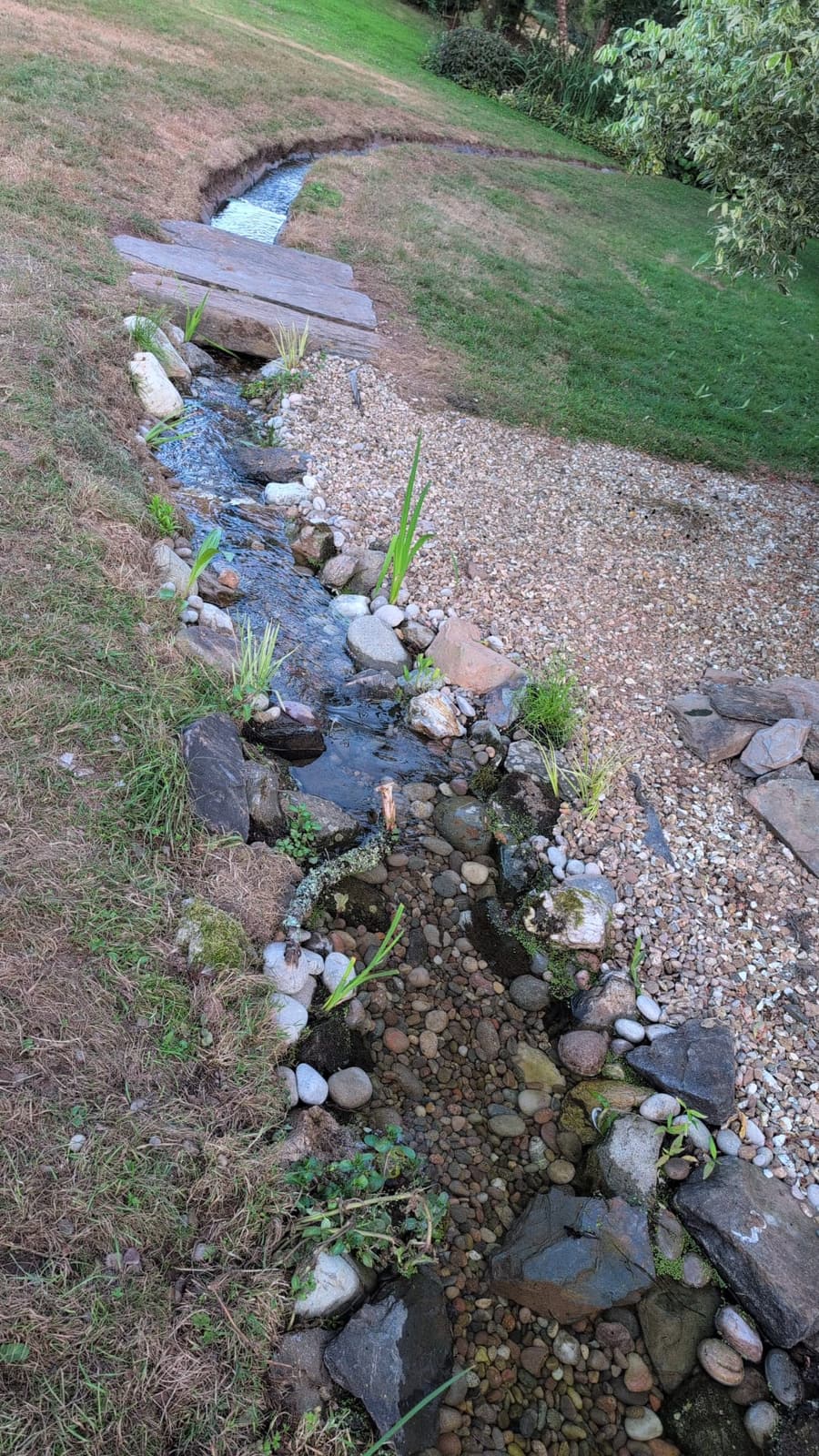
We repair, rebuild and look after ponds, rills, streams and water features across South Devon. Not just the cleaning, the actual construction work: liners, banks, edges and planting.
Liners do not last forever
Twenty years is a good innings for a pond or rill liner. After that, sun, frost and moving water leave it brittle and lifting at the edges, and it starts seeping rather than holding. The tell-tale sign is a feature that needs topping up far more often than it used to.
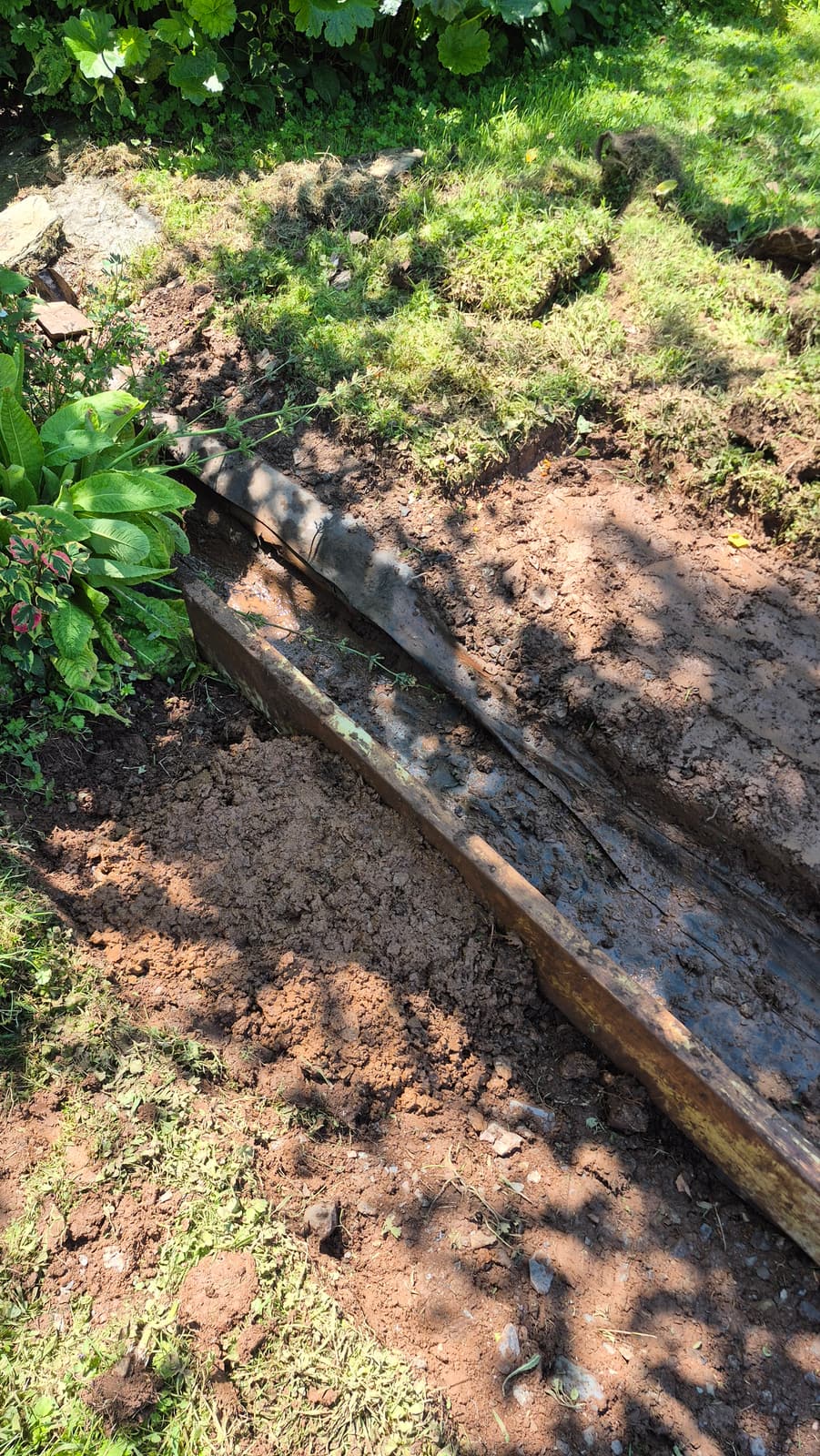
The rill we rebuilt this summer had run for over twenty years. The liner had perished, and where water had escaped it had quietly washed the banks away until the neat line of the channel had gone soft and ragged.
The banks matter as much as the liner
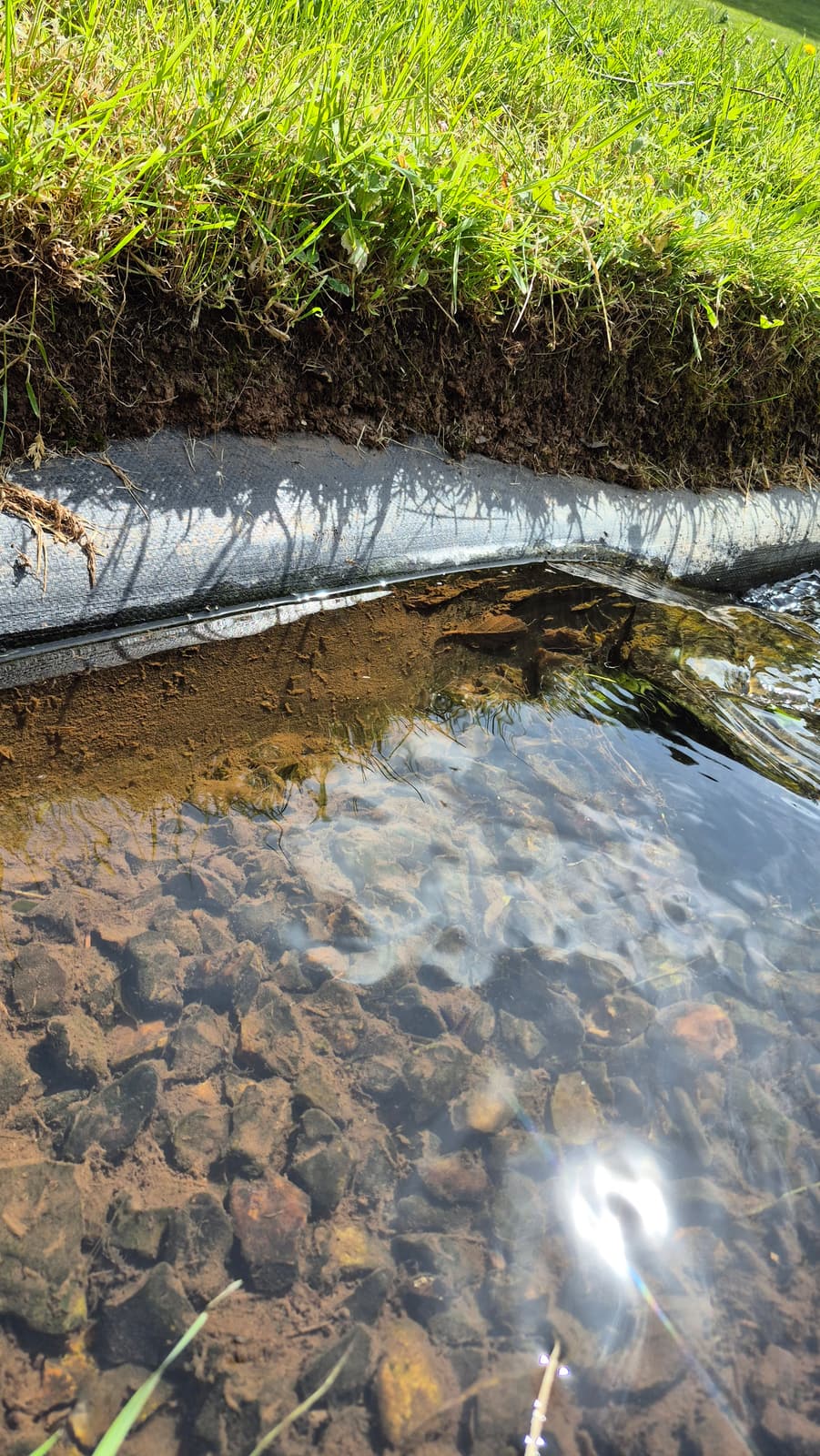
This is the part that gets skipped, and it is why some jobs get done twice. Laying a new liner into a washed-out channel just means the new liner sags into the same hollows the old one did.
We rebuild the ground first: fresh soil packed firm along both sides, the profile reshaped to a consistent width and depth, and proper support behind the edges. Then the liner goes in along the full run in one piece, because joins are exactly where liners fail.
Stone and pebble
Then the dressing, which turns a black liner back into a garden feature. Stone edging pins the liner down and hides it, and a pebble bed goes into the base of the channel.
The pebble is not only for looks. It shields the liner from sunlight and foot traffic, and it breaks up the flow so the water chatters over it rather than sliding silently down a smooth sheet.
Making it work for wildlife
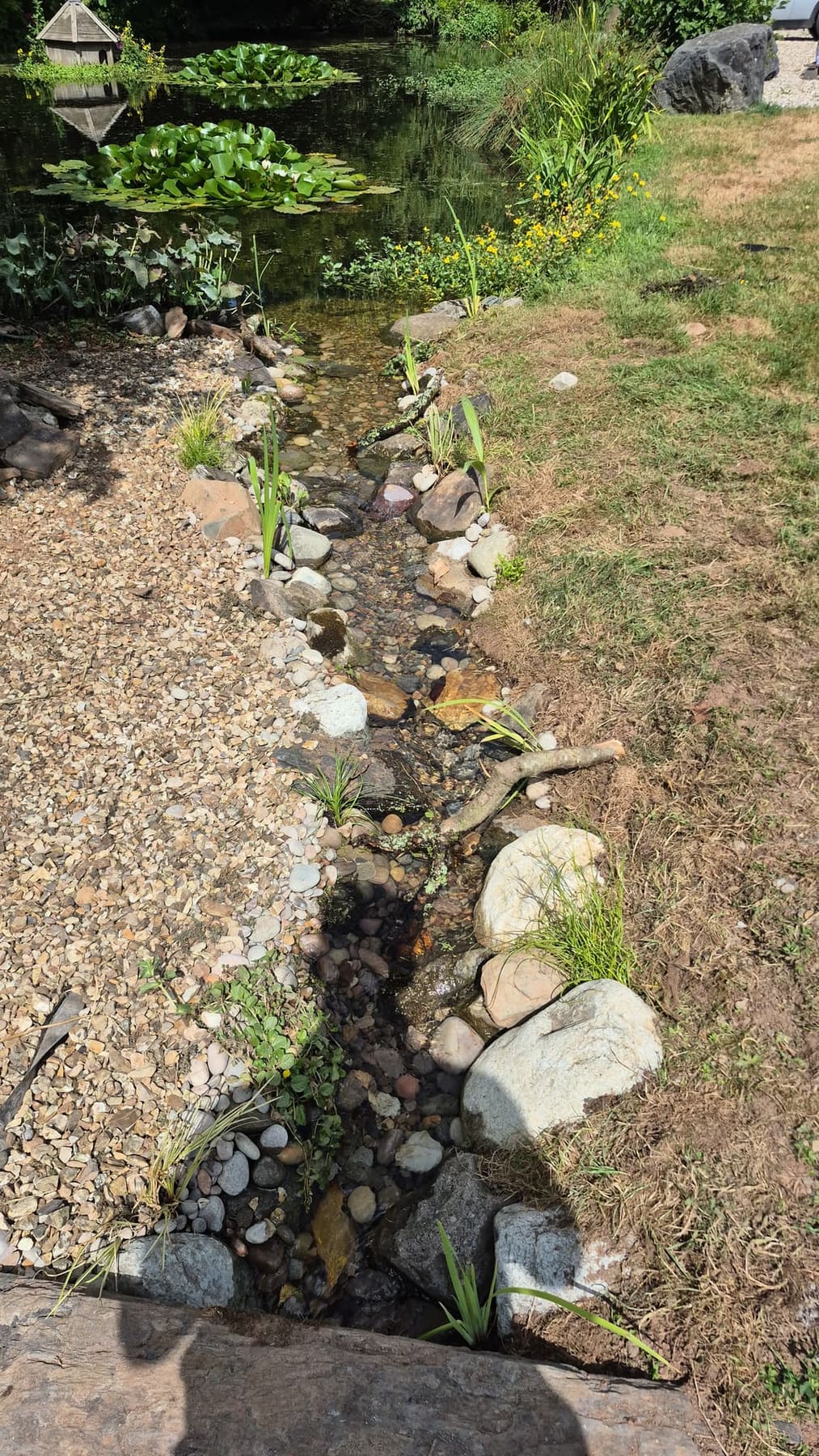
Given the chance we will always suggest grading one edge out into a shallow shingle beach rather than finishing it with a hard drop. It costs very little extra at the time and it changes what the water is worth.
A gentle gradient gives frogs, toads and newts a way in and out instead of a wall to climb, lets birds and hedgehogs down to drink safely, and means anything that falls in can walk out. Plant it with marginals, the irises, rushes and grassy clump-formers that like their feet in shallow water, and their roots bind the bank, shade the shallows and keep the water cooler and clearer.
What else we do with water
Pond cleaning and seasonal maintenance, blanketweed and silt, pump and filter care, marginal and oxygenating planting, leaks traced and repaired, and pool surrounds (we built the 200 square metre deck around a pool this year). For estates and larger grounds we take on ongoing upkeep of lakes and larger ponds.
Where we work
Torbay, the South Hams and Teignbridge, from Torquay and Paignton out to Totnes, Dartmouth, Kingsbridge and Salcombe. Ring and describe what the water is doing, we can usually tell you over the phone whether it sounds like a liner or something simpler.
Doing the right jobs at the right time
Water features are unforgiving about timing, and most of the damage we get called to fix was done by good intentions in the wrong month.
Late winter and early spring is when to get in and do the heavy work: silt out, blanketweed cleared, pumps serviced, marginals divided before they get going. Do it now and you are ahead of the season.
Through the summer it is mostly topping up, keeping the blanketweed in check and watching the levels. A pond that suddenly needs far more water than usual is telling you something about its liner.
Autumn is netting against leaf fall, which is the single best thing you can do for water quality. Leaves that sink and rot are where next year's silt and algae problems come from.
Winter is the season to leave well alone. Do not smash ice, and do not clear a pond out in the cold: everything in it is down in the silt waiting for spring.
Why ponds go green
Almost always too much light and too many nutrients, and almost never something you can fix with a bottle. Sun on open water plus nutrients from leaf litter, fish food or runoff equals algae, every time.
The lasting fixes are physical: surface cover from lilies or floating plants so less light reaches the water, marginals and oxygenators competing for the same nutrients, keeping leaves out in autumn, and not overfeeding fish. We would rather set a pond up so it balances itself than sell you a treatment you have to keep buying.
Water feature needing attention?
Losing water, slumping banks or just tired. We rebuild rills, streams and ponds across South Devon. WhatsApp is easiest: send photos of the garden straight over and you will usually hear back quicker than email.
☎ Call 01803 900096 WhatsApp us Send an enquiry