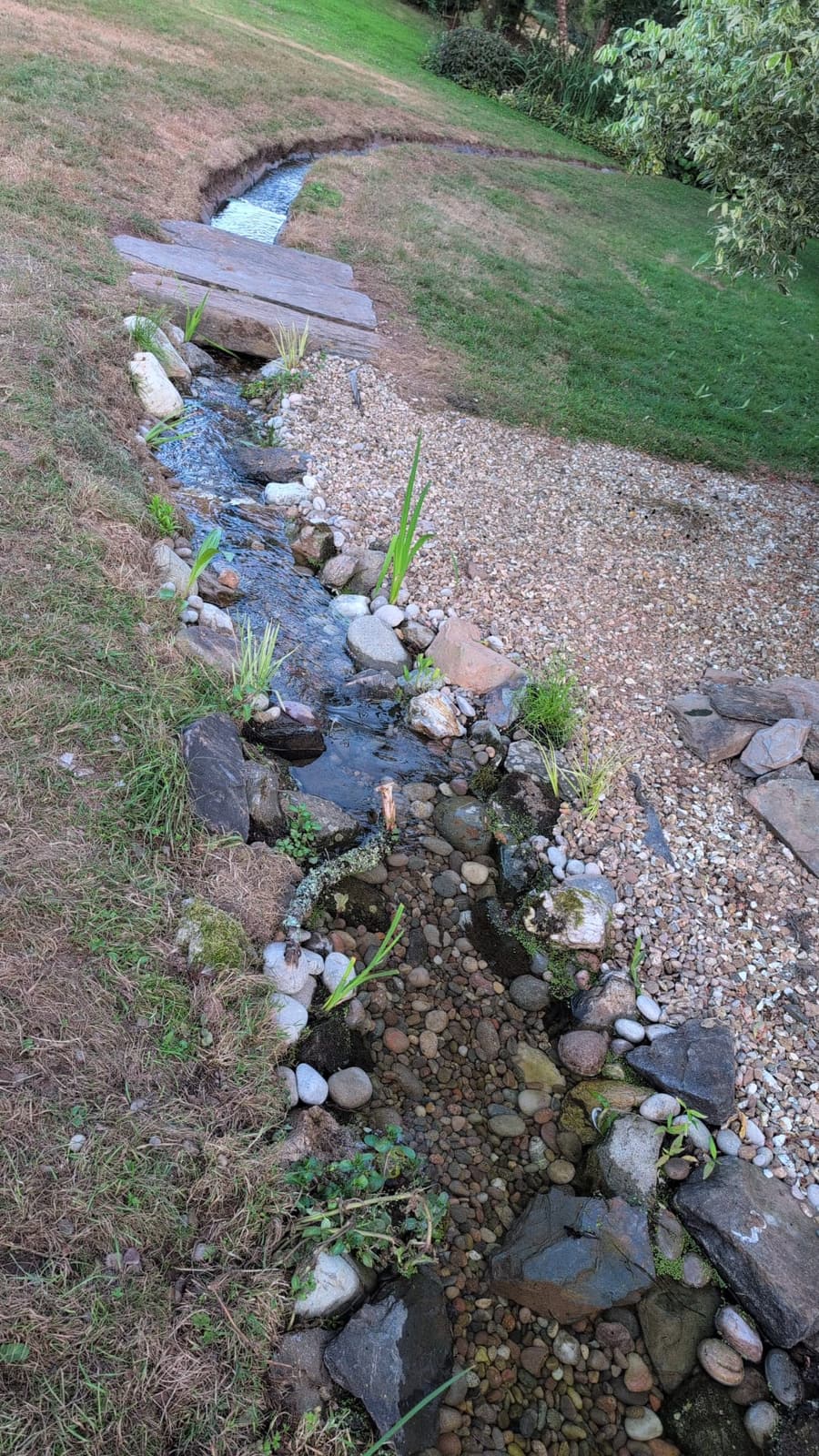
A rill is one of those garden features that earns its keep every single day. This one runs the length of a large lawn in the South Hams and feeds a lily pond at the bottom, and it had been doing that job for over twenty years. That is a good innings for any liner, and by this summer it had run out of road.
What Had Gone Wrong
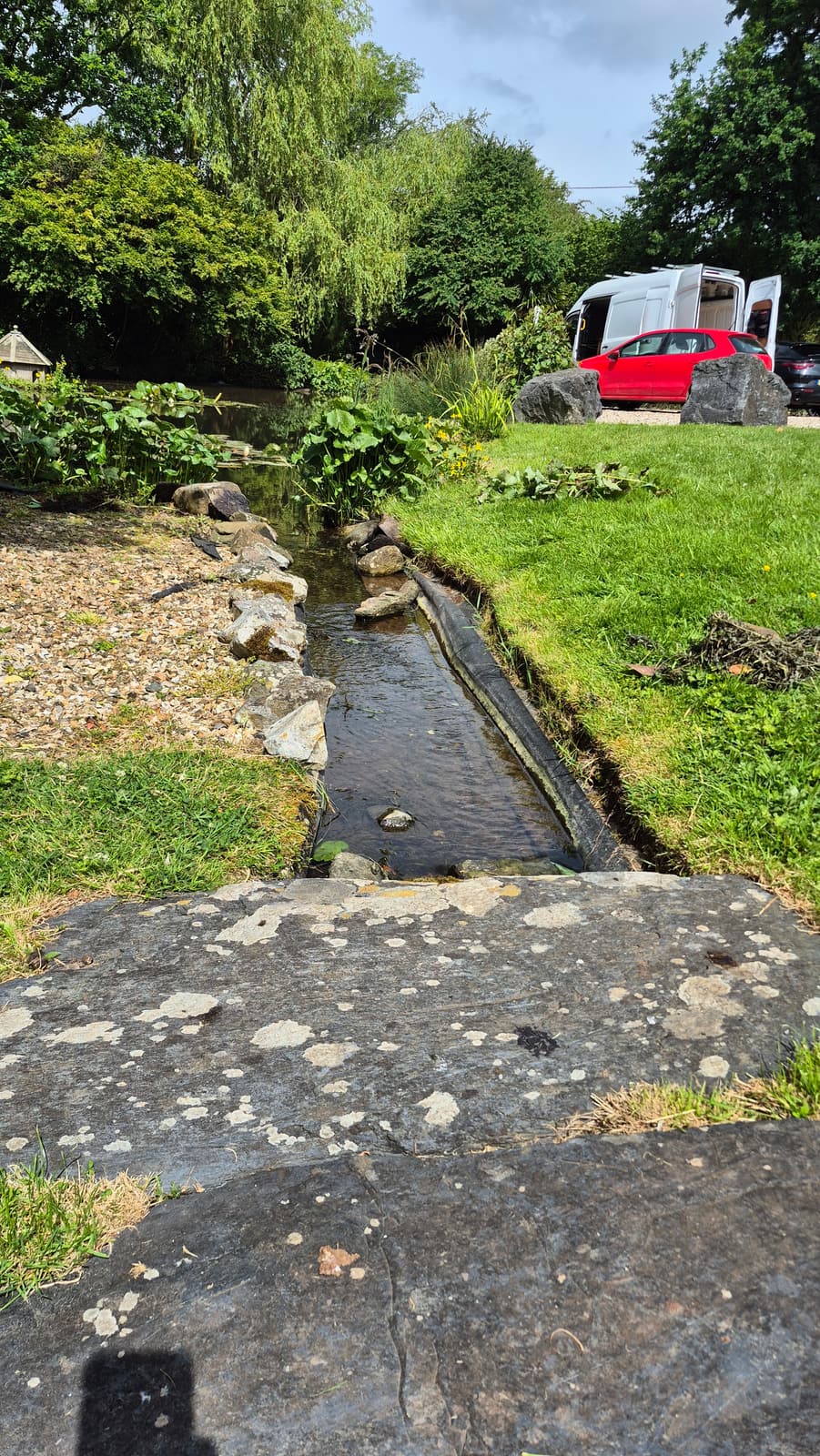
Two things had failed together, which is usually how it goes with water features.
First, the liner. Twenty years of sun, frost and moving water had left it brittle, split in places and lifting at the edges. Once a liner starts to go you get seepage rather than flow: water disappears into the ground instead of running down to the pond, the channel runs low, and the whole system needs topping up far more often than it should.
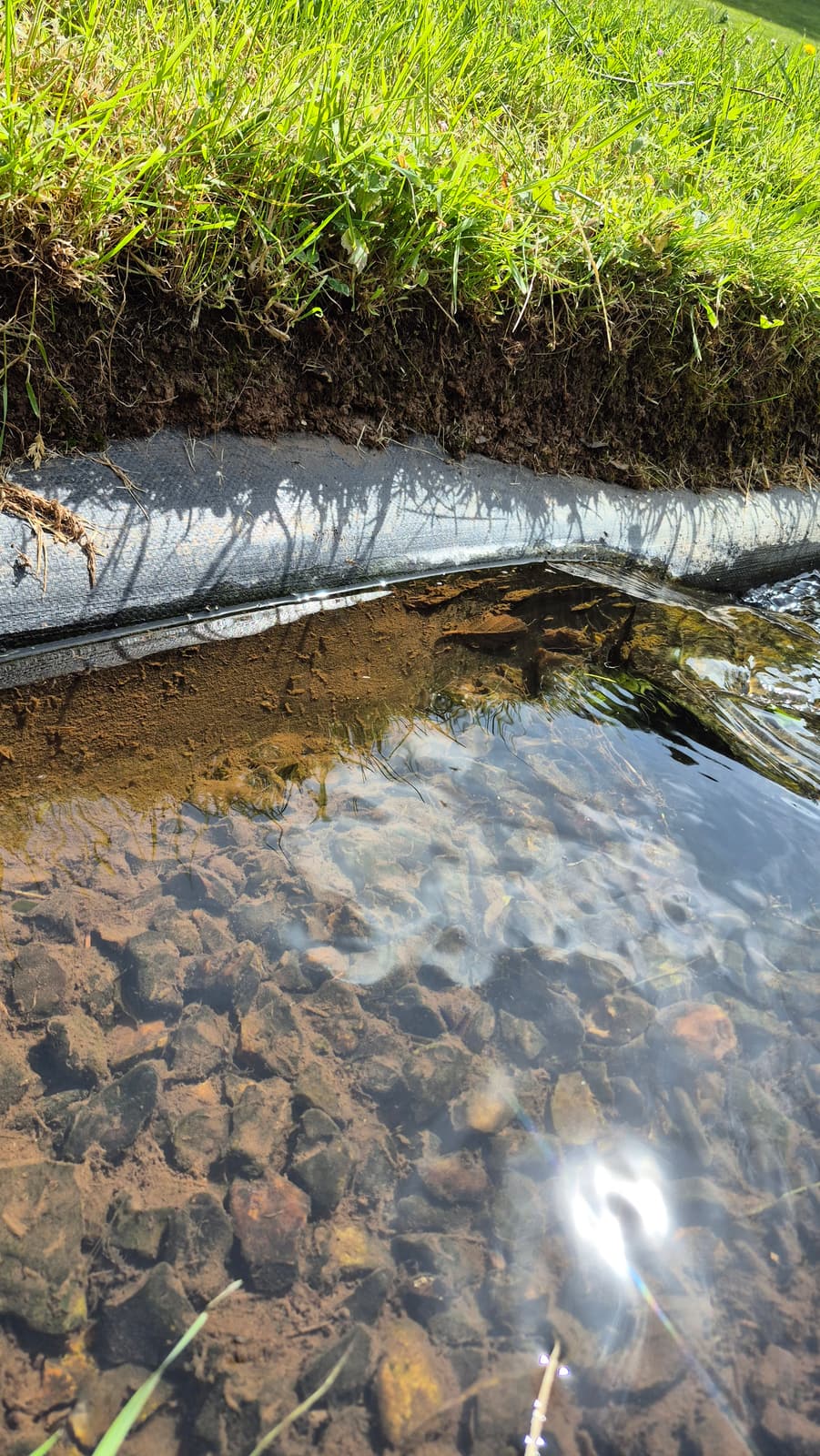
Second, the banks. Where the liner had lifted and water had escaped, it had started quietly washing the sides away. The channel had widened in places, the turf edges were undercut and beginning to slump in, and the neat line of the rill had gone soft and ragged. Left another season or two it would have started collapsing properly.
Stage 1: Stripping the Whole Run
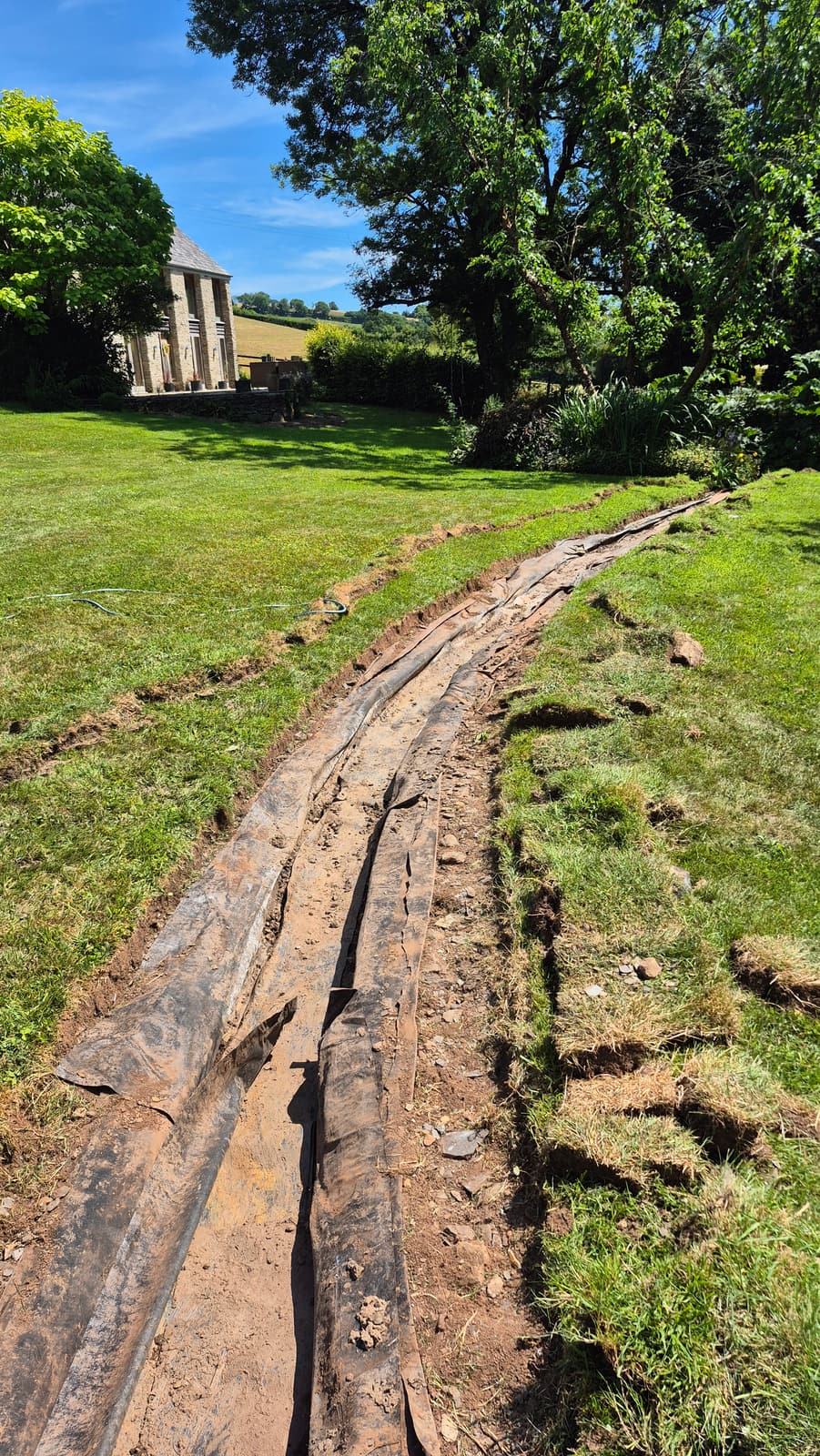
There is no sensible way to patch a twenty-year-old liner, so the whole lot came out. We lifted the stone edging and set it aside for reuse, pulled the old liner along the full run, and cleared out two decades of silt and gravel that had built up in the base.
With it stripped back to bare earth we could finally see the profile properly: where it had eroded wide, where it had silted up, and where the falls had drifted out of true over the years.
Stage 2: Rebuilding the Banks
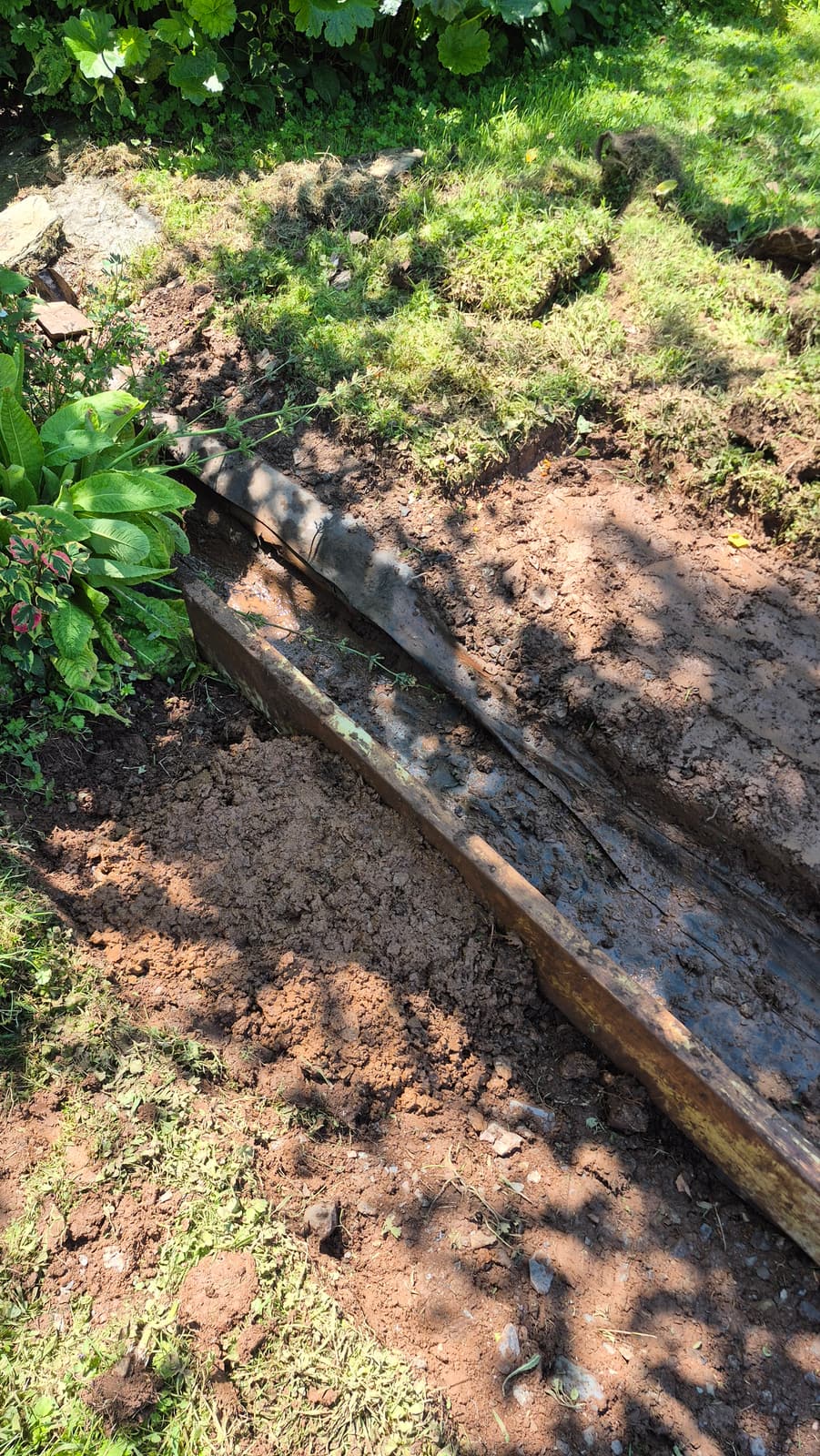
This is the part that stops you doing the job twice. Rather than simply laying a new liner into a washed-out channel, we rebuilt the banks where the water had eaten into them: fresh soil brought in, packed down firm along both sides, and the profile reshaped so the channel ran to a consistent width and depth again with proper support behind the edges.
A liner only ever holds the shape you give it. Get the ground right underneath and the finished rill keeps its line for another twenty years; skip it and the new liner just sags into the same hollows the old one did.
Stage 3: The New Liner
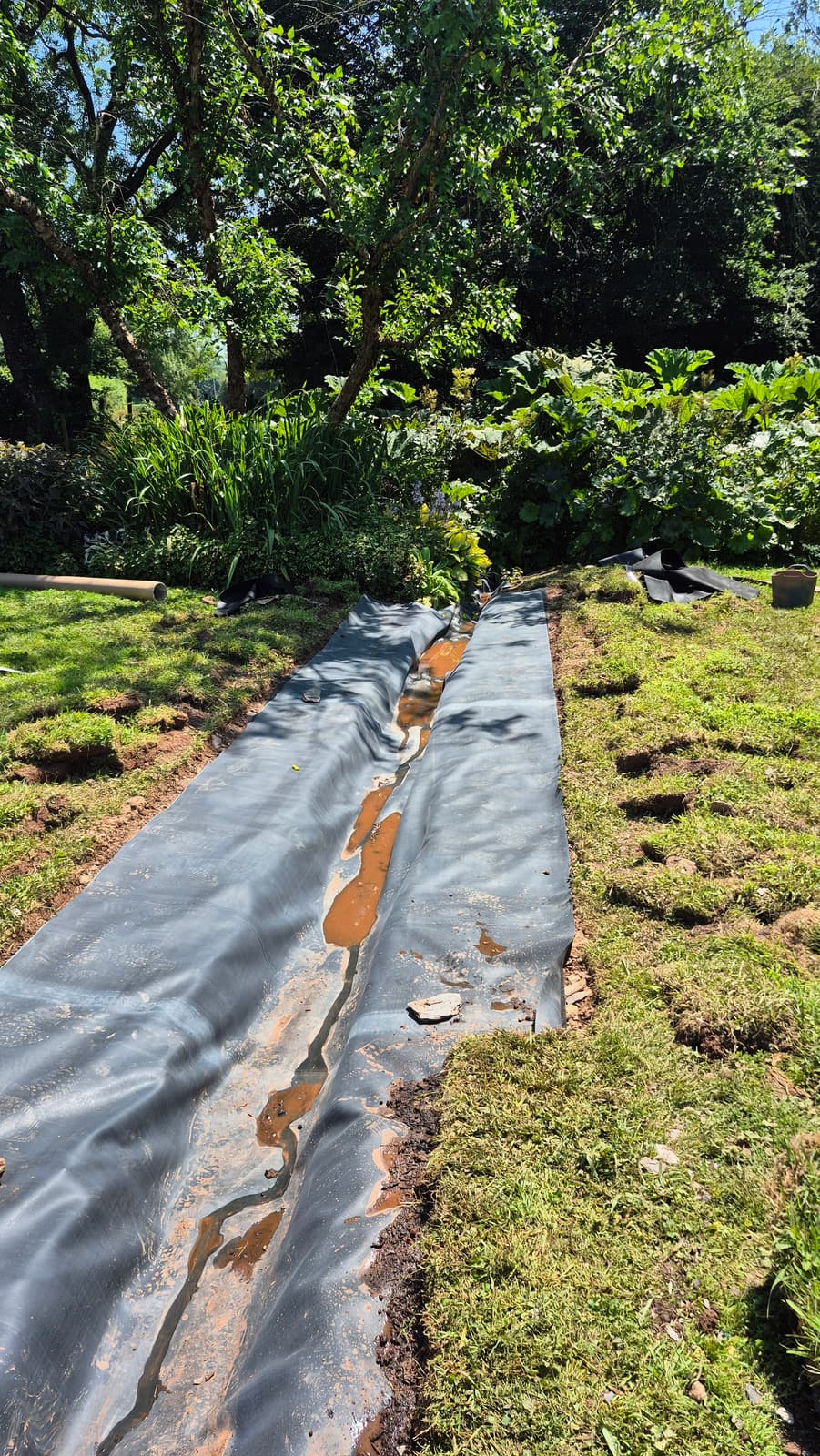
With the ground made good, the new liner went in along the entire run, bedded into the reshaped channel and lapped up under the edges where the stone would sit on top. Keeping the run continuous matters: joins are exactly where liners fail, so the fewer of them the better.
Stage 4: Stone & Pebble
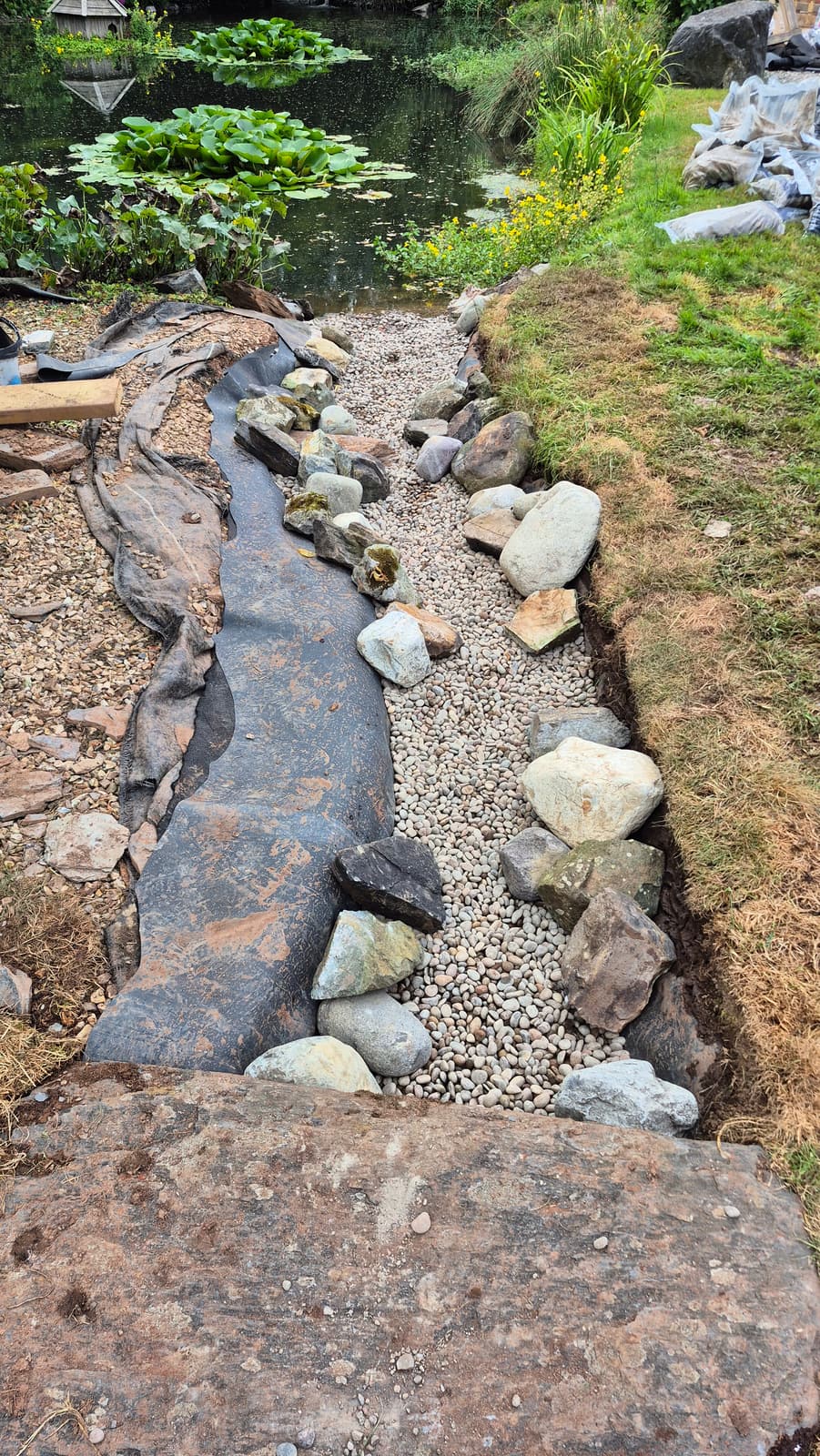
Then the dressing, which is what turns a black liner back into a garden feature. The original stone was re-laid along both edges, pinning the liner down and hiding it, and a fresh bed of pebble went into the base of the channel.
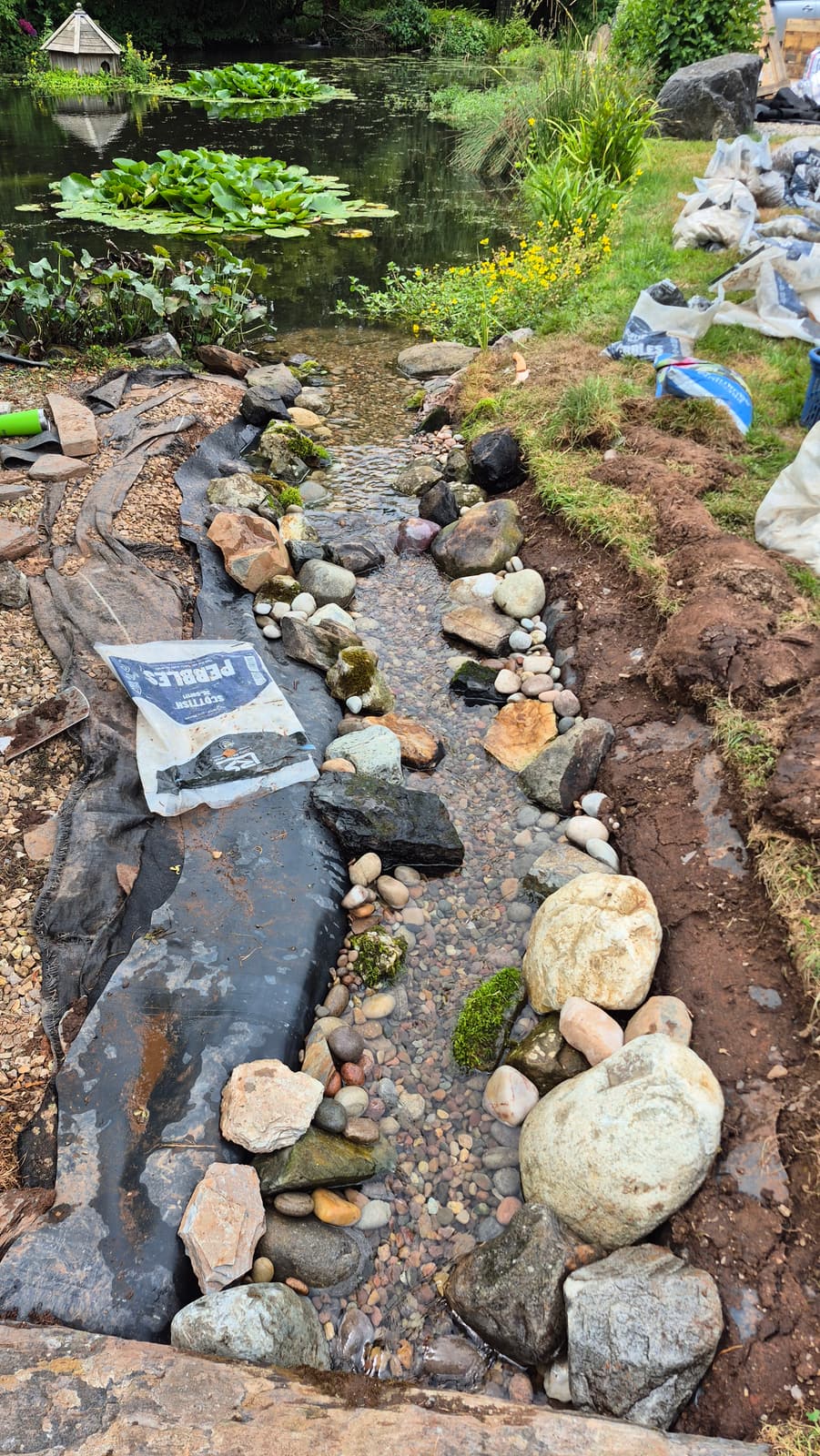
The pebble is not just for looks. It protects the liner from sunlight and foot traffic, it slows and breaks up the flow so the water chatters rather than slides, and it gives the whole thing the feel of a natural streambed rather than a hard engineered edge.
Stage 5: A Wildlife Habitat
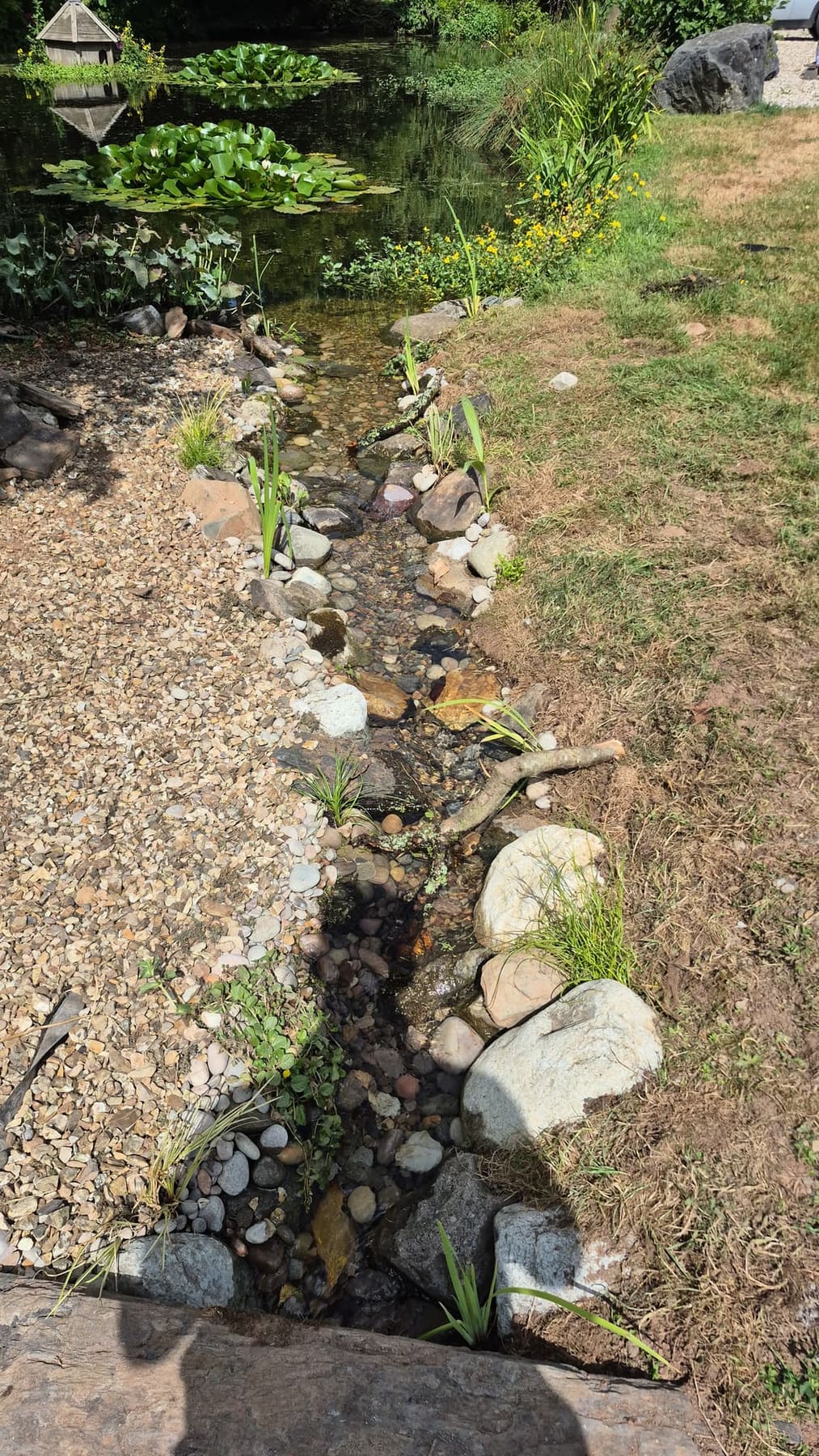
The best part of this job was not really the repair at all. At the top of the run, where the rill meets the open water, we took the chance to turn what had been a plain hard edge into a proper wildlife habitat.
Instead of finishing the bank with a sharp drop, we graded it out into a shallow shingle beach that runs gently into the water. That gentle gradient does an enormous amount of work in a garden. It gives frogs, toads and newts a way in and out rather than a wall to climb, it lets birds and hedgehogs get down to drink safely, and if anything does fall in, it has somewhere to walk out. Bees and hoverflies use the damp margin too.
Then it was planted up with marginals, the plants that like having their feet in shallow water: irises, rushes and grassy clump-formers set in among the stone along the edges. They knit the bank together with their roots, shade the shallows so the water stays cooler and clearer, and give cover for anything moving between the water and the lawn.
Give it a season or two and the planting will have grown in and softened the stonework completely, and the beach will be one of the busiest corners of the garden.
Running Again
Water back on, and it runs the full length as it should, with the lilies and the pond planting carrying on exactly as before. The bank line is crisp again, the edges are firm, and the channel holds its water instead of feeding it into the lawn.
Twenty years of service, and the only real fault was that everything around it had been quietly washing away.
If you have a rill, stream or pond liner that is losing water, banks that are starting to slump, or a water feature that has simply stopped looking after itself, we cover Torbay, the South Hams and across South Devon. Have a look at our pond and water feature services, or get in touch and we will come and take a look.
Water Feature Needing Attention?
Rills, streams, ponds and pool surrounds, repaired and rebuilt across Torbay, South Hams and South Devon. WhatsApp is easiest: send photos of the garden straight over and you will usually hear back quicker than email.
☎ Call 07311 264035 WhatsApp us Send an enquiry