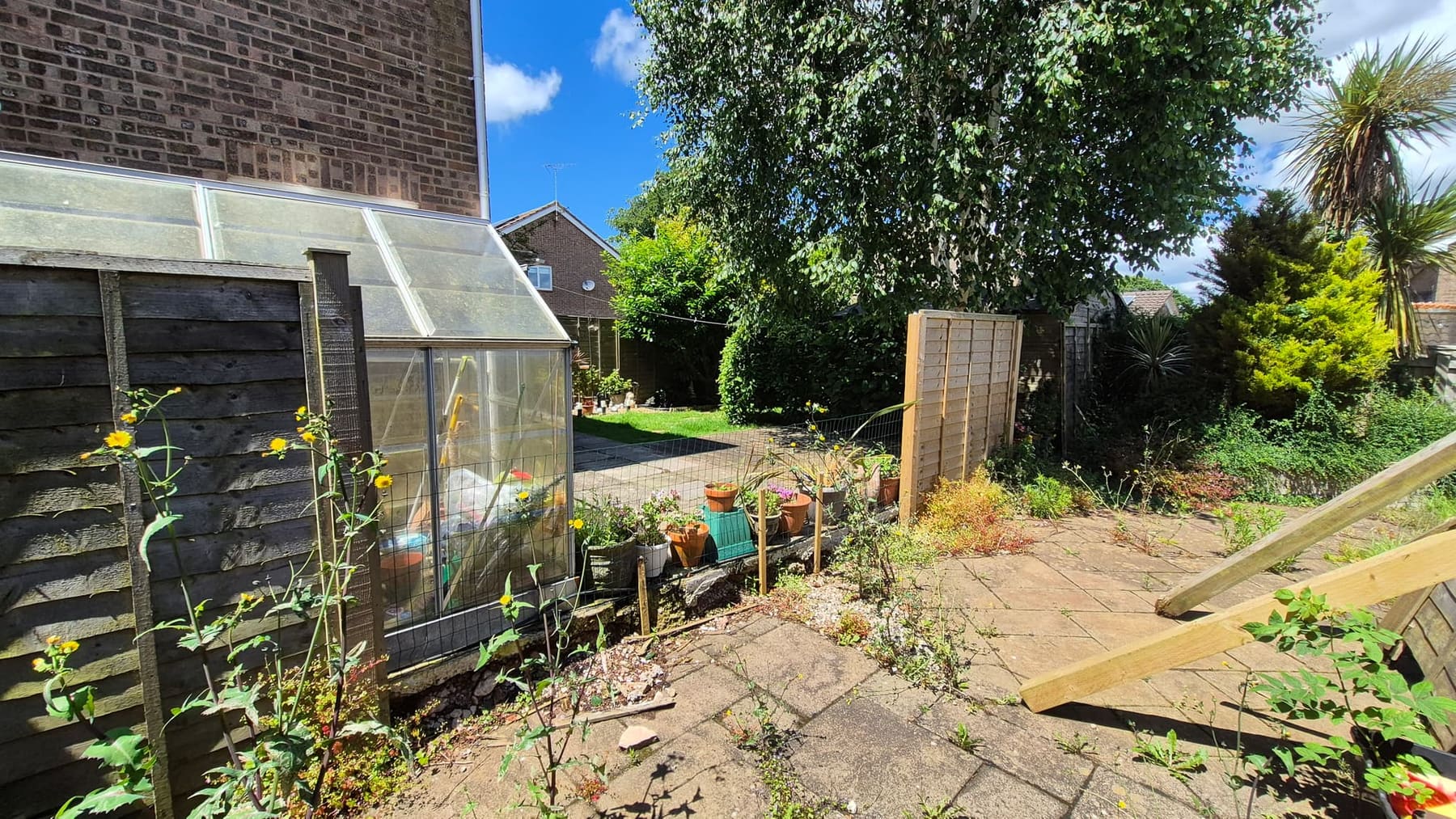
Fencing is one of those jobs people put off until the weather makes the decision for them. This one was past that point: the boundary had essentially gone over completely. The old panels were blackened, soft and coming apart, the posts had rotted through at ground level, and what was left was being held up by wire mesh, a length of timber propped against it, and one spare panel standing on its own like a sail.
The owners had already bought a couple of replacement panels and tried to patch the worst of it themselves, which is exactly what most people do, and entirely fair enough. The trouble is that a new panel is only ever as good as the post it hangs on. Slotting fresh panels between rotten posts buys you a few months, and then you are back where you started with a couple of panels' worth of timber already spent.
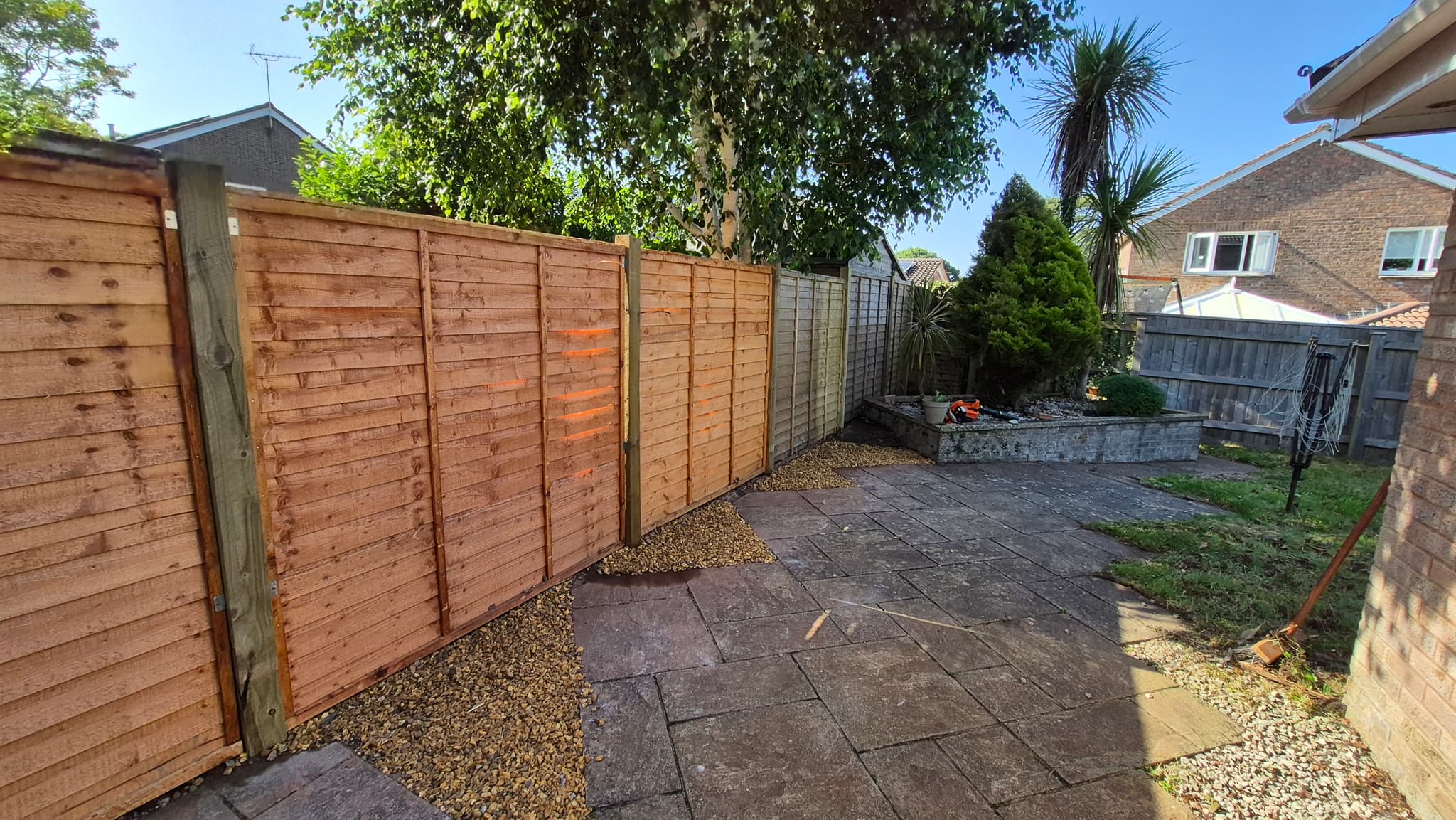
Here is the same boundary once it was done.
Why Fences Fail
It is almost always the same story. Panels weather and eventually go soft, but what actually brings a fence down is the posts rotting at the point where they meet the ground. That is where timber stays damp longest, and once a post has gone there, the panel either sags, twists, or comes out completely in the first decent wind.
Which is why patching a run like this rarely works out cheaper. If the posts have gone, the next panel along is usually only a season behind, and you end up paying twice: once for the patch, and again for the proper job.
Stripping It Out
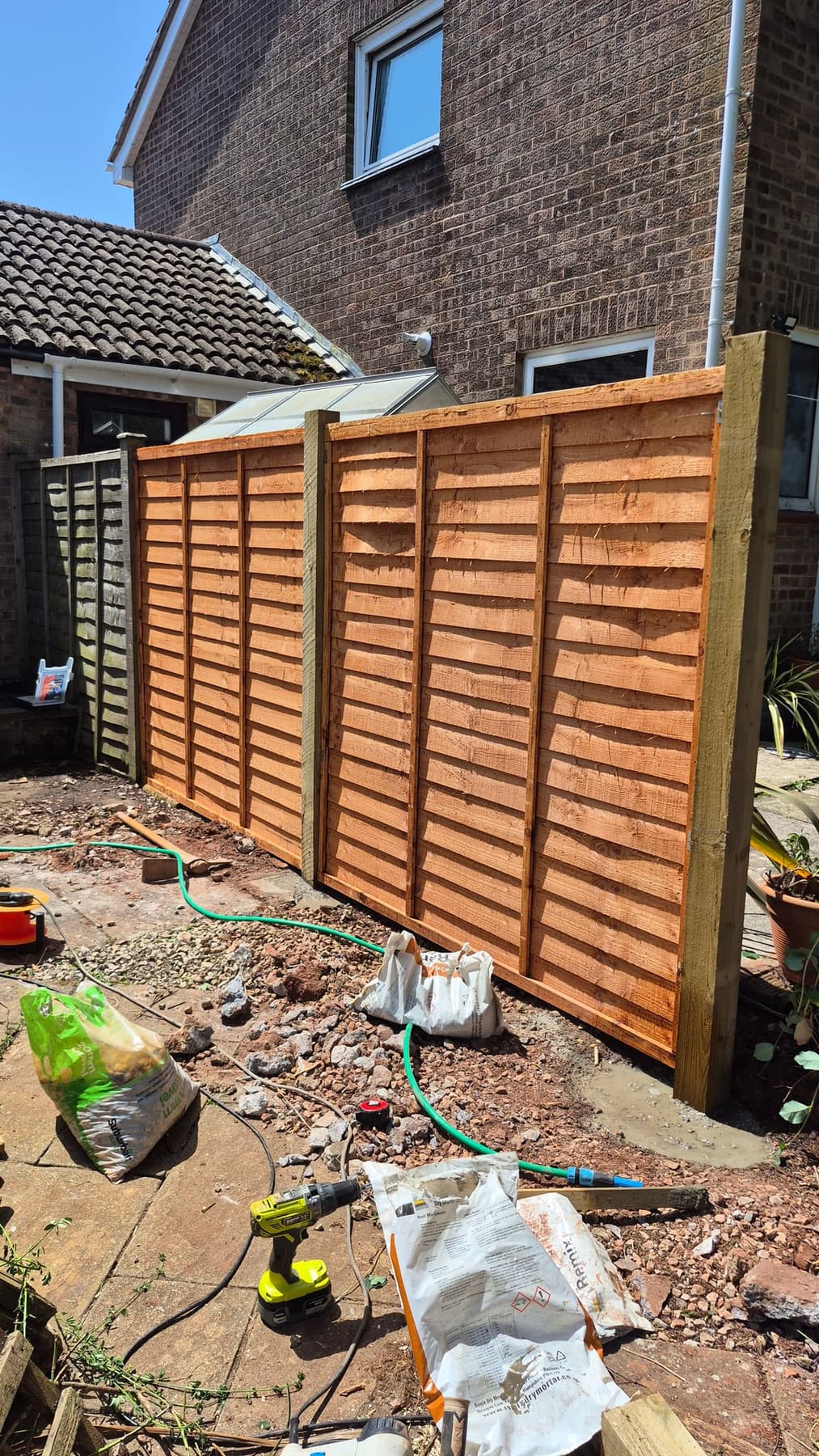
The old panels and posts came out along the run, along with the wire mesh, bracing and improvised repairs that had been added over the years to keep things upright. The panels the owners had bought for the patch were kept and worked back into the new run, so that timber did not go to waste.
Old post stumps and concrete were dug out properly rather than being left in the ground. That matters more than it sounds: leave them in and every new post has to be shuffled along to dodge the old hole, and you lose the straight line before you have even started.
New Posts, Properly Set
New treated timber posts went in, set firm and plumb, with the panels fitted as we worked along the line. On a boundary like this the run has to stay straight and the tops need to stay level, so it pays to keep checking as you go rather than sorting it out at the end.
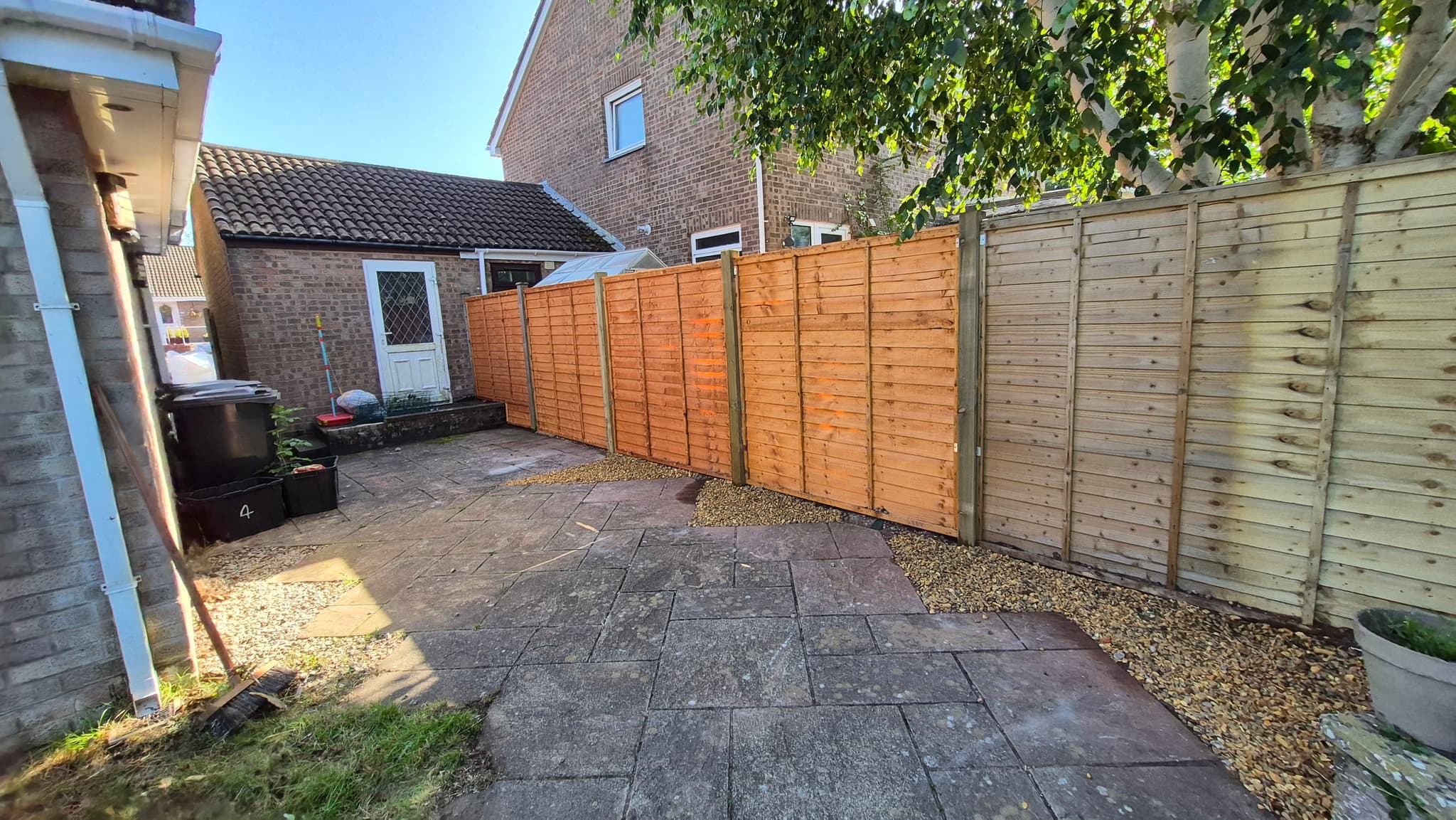
The result is a proper structural fence rather than a screen: solid posts, sound panels, and a straight line that will still be straight in a few years.
Finishing the Base
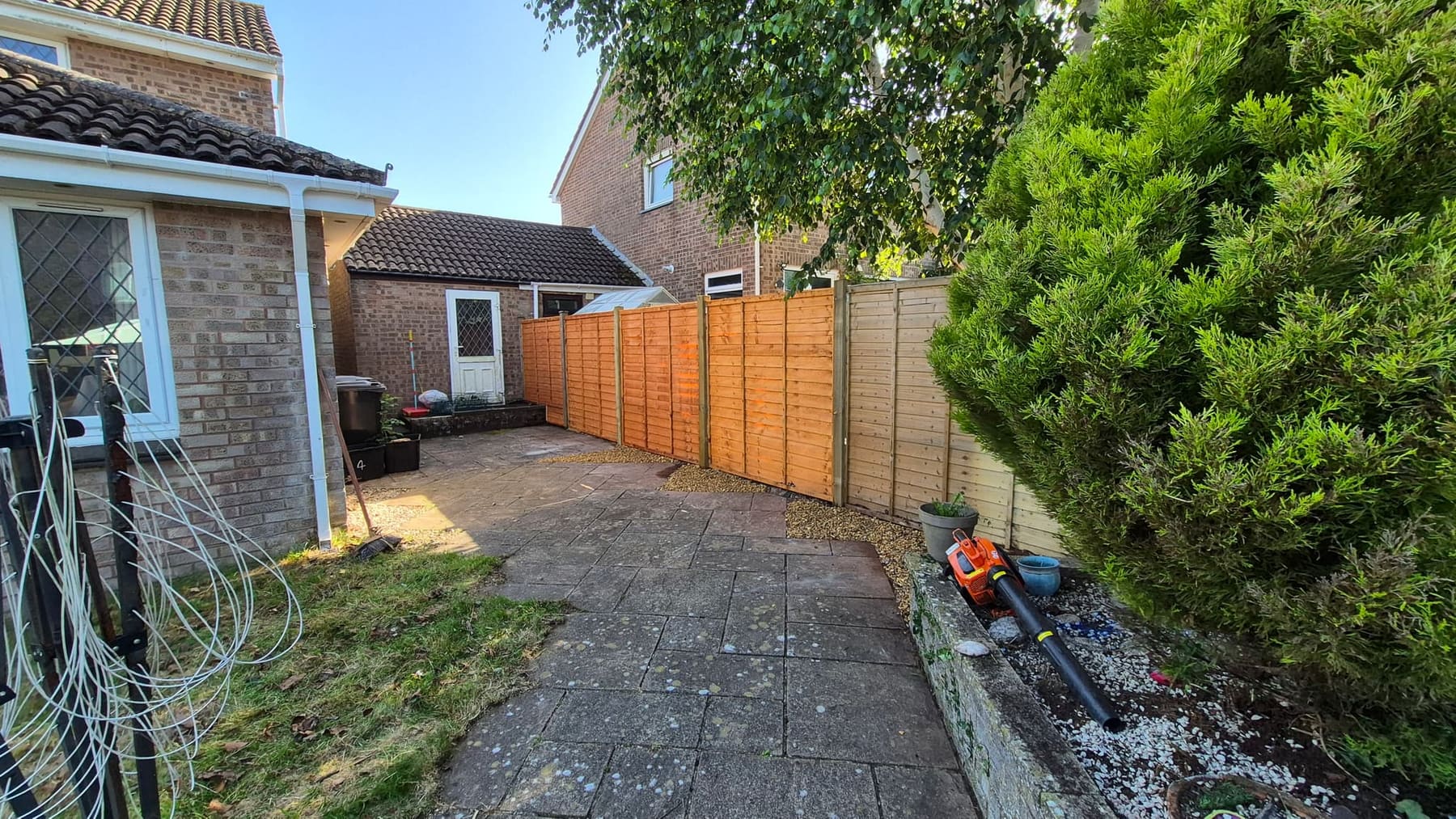
The base of the fence was finished off with gravel along the run. It keeps soil and wet planting off the bottom of the panels, which is exactly what shortens their life, and it tidies the edge so the whole boundary reads as finished work rather than a repair.
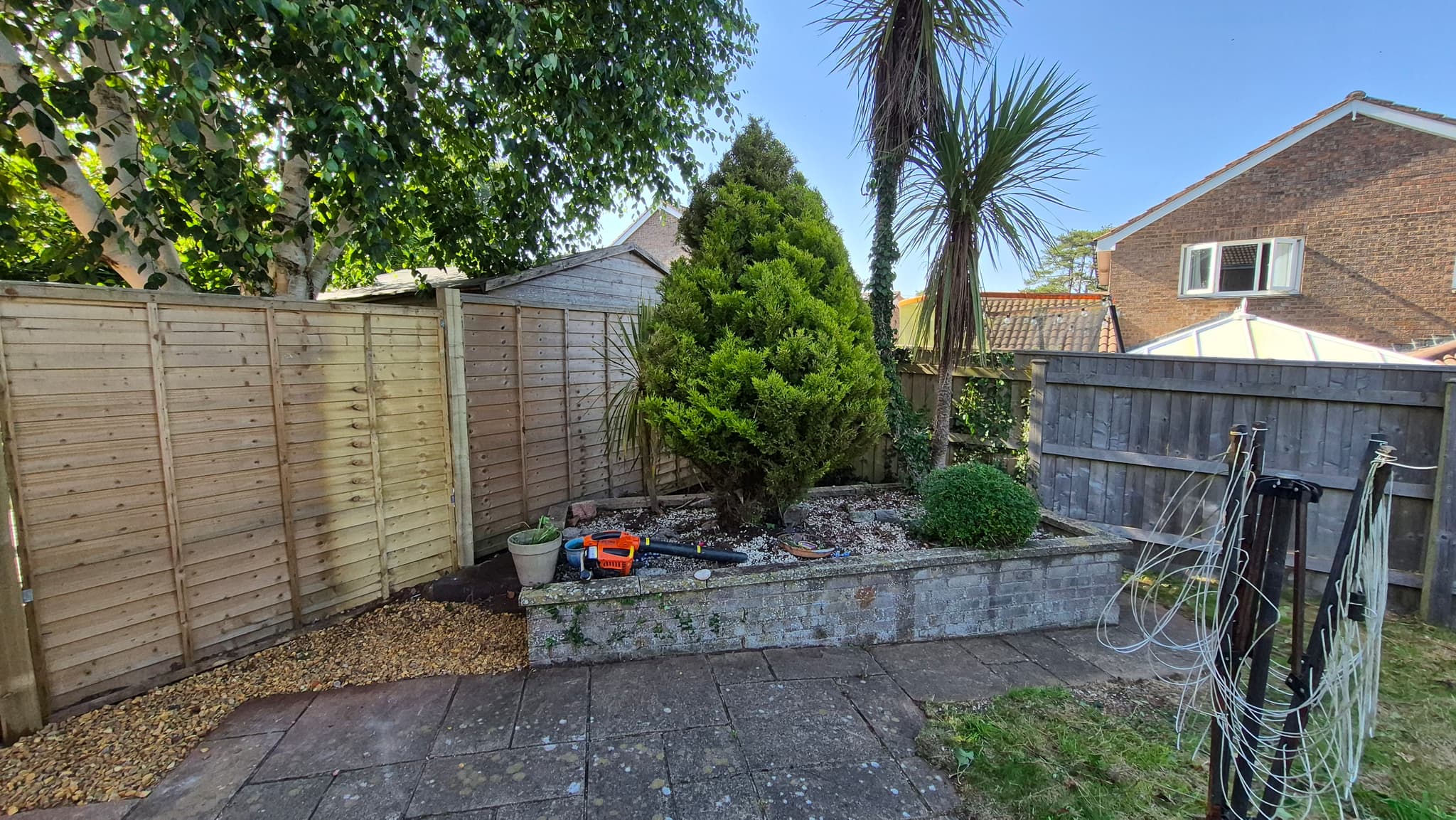
Where the new run meets the neighbouring boundary and the raised bed, the panels were cut and set to follow the existing lines, so the new work ties in cleanly instead of fighting what is already there.
Fencing, Now Part of What We Offer
We have been doing timber work alongside our gardening for a while now, from the 200m² pool deck we finished this summer to gates, screening and repairs. Fencing is a natural part of that, so it is now a service in its own right: full replacements, single panels, posts, gates and repairs.
If your fence is leaning, panels are coming loose, or posts have gone at the base, we cover Torbay, the South Hams and across South Devon. Get in touch and we will come and price it up.
Need a Fence Replaced?
Full boundary replacements, single panels, posts and gates across Torbay, South Hams and South Devon. WhatsApp is easiest: send photos of the garden straight over and you will usually hear back quicker than email.
☎ Call 07311 264035 WhatsApp us Send an enquiry